marks

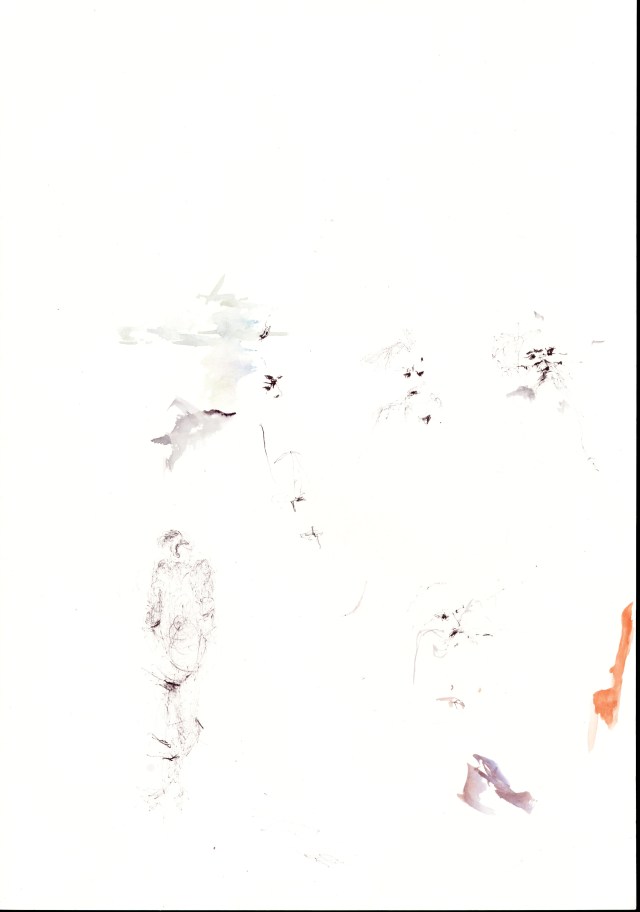
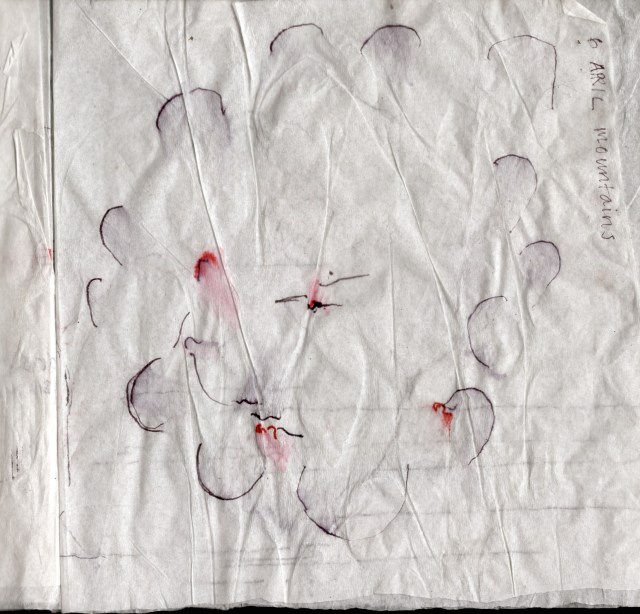
So I was talking with my partner, Gil, last evening about one of Monday’s drawings made at the Mountains Care Home.

I called the drawing care because that is what I witnessed. A care worker assisting a resident with their evening meal.

What Gil saw was a difference in the marks that describe the care worker and the marks that describe the resident. Without seeing the actual drawing it may be difficult to discern, but here it is.

2 May Ian

Posted in Uncategorized | Tagged , , , , , , | Leave a comment

How we learn

So I learn by drawing.

The sensory inputs are of sound, smell, temperature, shapes, textures

it produces lines, marks, a drawing

2 May waiting

researching the world

2 May hands

exploring surfaces

2 May supper

waiting

2 may

hands

2 May Ian

care

Posted in Uncategorized | Leave a comment

Age

So will I get more set in my ways as the years pass? Am I already? Being forced to answer  very basic questions

‘why would I do this?’

‘what is the point of making a block print except for creating patterned textiles?’

‘why would I want to do anything differently, I am 92 years old?’

That last challenges me most. Right now, I am not 92 and am continuously curious, long may it last.

Drawing is my map, my transport, my compass and my tool.

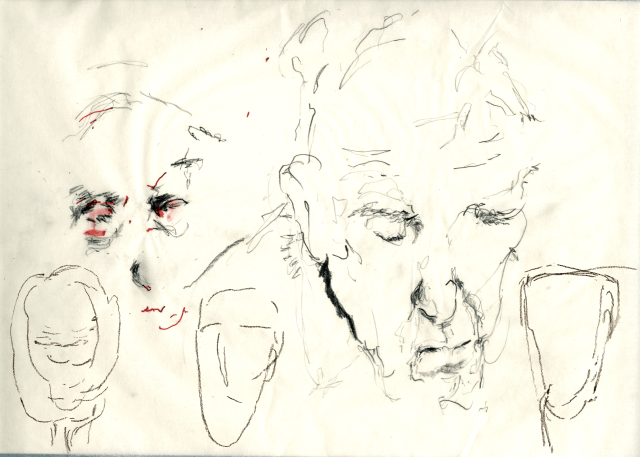
This is what happened when I drew for the first time at the Mountains Nursing Home.


Mountains 25th April


Posted in Uncategorized | Leave a comment

The Philosophy of Dementia

I am hunting around to find a soul mate in another discipline. Someone whose work, thinking and life might intersect with mine. In the process I found this

30. The Philosophy of Dementia Stavros J. Baloyannis Professor Emeritus of Neurology Aristotelian University Thessaloniki, Greece

Abstract

Philosophy, even from the era of pre-Socratic philosophers, has continuously been concerned with the mind and the interior life the human being, attempting to discover and analyze the real self, the consciousness, the thinking, the emotion, and the morality. The reasonable thinking (LógoV or Word) is one of the main issues of Philosophy even from the era of Heracletus, the first existential philosopher of the sixth century BC. The aim of life, as continuous effort for spiritual elevation was an important issue in Greek Philosophy. The importance of self-knowledge was highlighted persistently by Socrates and Plato as well as, many centuries later, by Kirkegaard and other existential philosophers. In the last fifty years, under the continuously ongoing research in the field of neurosciences, neurophilosophy emerged as a discipline of philosophy, of vital importance, which has begun to scrutinize whether the features of the mind, of the self, can be described in solely neurobiological terms, on the basis of the organized neuronal networks and their synapses or in a broader philosophical basis. Dementia is the end of the drama of the progressive decline of mental faculties. It is reasonable, that within the subject of neurophilosophy, dementia attracts the attention of many thinkers and neuroscientists who endeavour to find an explanation for that devastating process, which affects mental activities, personality and social behaviour, encapsulating the patients in their own being, in the form of an existential enclosing. However, the detailed observation and careful analysis of the life of many demented patients plead in favor of the fact that the fundamental moral principles and the dignity might remain unaffected and only the social being, based on the experience and the education and emerged in a social context carries the signs of the debilitating disease. In conclusion, we understand that the demented patient is still a person, who deserves to be treated with respect and dignity, respecting his interior life.


Read the full article at https://www.researchgate.net/publication/256546610_The_Philosophy_of_Dementia

Posted in Uncategorized | Leave a comment

Prof Zeki’s thoughts

statement on neuroesthetics

What is art, why has it been such a conspicuous feature of all societies, and why do we value it so much? The subject has been discussed at length without any satisfactory conclusion. This is not surprising. Such discussions are usually conducted without any reference to the brain, through which all art is created, executed and appreciated. Art is a human activity and, like all human activities, including morality, law and religion, depends upon, and obeys, the laws of the brain. We are still far from knowing the neural basis of these laws, but spectacular advances in our knowledge of the visual brain allows us to make a beginning in studying the neural basis of visual art.

The first step in this enquiry is to define the function of the brain and that of art. Many functions can be ascribed to both. One overall function, common to both, makes the function of art an extension of the function of the brain: the acquisition of knowledge, an activity in which the brain is ceaselessly engaged. Such a definition naturally steeps us in a deeply philosophical world, of wanting to learn how we acquire knowledge, what formal contribution the brain makes to it, what limitations it imposes and what neural rules govern the acquisition of all knowledge. This catalogue is not much different from that outlined by Immanuel Kant in his monumental Critique of pure Reason, save that Kant spoke exclusively in terms of the mind. And since the problem of knowledge is a principal problem of philosophy, it should also not surprise us that the great philosophers, from Plato onwards, have devoted significant parts of their work to discussions of art, through which knowledge is gained and imparted.

Because knowledge has to be acquired in the face of constantly changing conditions, mutability is the cornerstone of the great philosophies of the West and East. But it is also the key problem for the brain in its quest for knowledge and for art, whose object, Tennessee Williams once said, was “to make eternal the desperately fleeting moment.” Neural studies are increasingly addressing the question of how the brain achieves this remarkable feat. The characteristic of an efficient knowledge-acquiring system, faced with permanent change, is its capacity to abstract, to emphasize the general at the expense of the particular. Abstraction, which arguably is a characteristic of every one of the many different visual areas of the brain, frees the brain from enslavement to the particular and from the imperfections of the memory system. This remarkable capacity is reflected in art, for all art is abstraction. John Constable wrote that “the whole beauty and grandeur of Art consists… in being able to get above all singular forms, particularities of every kind [by making out] an abstract idea… more perfect than any one original.” He could have been describing the functions of the brain, for the consequence of the abstractive process is the creation of concepts and ideals. The translation of these brain-formed ideals onto canvas constitutes art.

Art of course, belongs in the subjective world. Yet subjective differences in the creation and appreciation of art must be superimposed on a common neural organization that allows us to communicate about art and through art without the use of the spoken or written word. In his great requiem in marble at St. Peter’s in Rome, Michelangelo invested the lifeless body of Christ with infinite feeling – of pathos, tenderness, and resignation. the feelings aroused by his Pietã are no doubt experienced in different ways, and in varying intensity, by different brains. But the inestimable value of variable subjective experiences should not distract from the fact that, in executing his work, Michelangelo instinctively understood the common visual and emotional organization and workings of the brain. That understanding allowed him to exploit our common visual organization and arouse shared experiences beyond he reach of words.

It is for this reason that the artist is in a sense, a neuroscientist, exploring the potentials and capacities of the brain, though with different tools. How such creations can arouse aesthetic experiences can only be fully understood in neural terms. Such an understanding is now well within our reach. The first step is to understand better the common organization of our visual and emotional brains, before we can even proceed to enquire into the determinants of neural variability. But there is little reason to doubt that a study of variability, of how a common visual activation can arouse disparate emotional states, will constitute the next giant step in experimental studies of the visual brain.

In such a study neuroscientists would do well to exploit what artists, who have explored the potentials and capacities of the visual brain with their own methods, have to tell us in their works. Because all art obeys the laws of the visual brain, it is not uncommon for art to reveal these laws to us, often surprising us with the visually unexpected. Paul Klee was right when he said, “Art does not represent the visual world, it makes things visible.” We hope that the enormous international enthusiasm that a study of the neural basis of aesthetic experience has generated will prove an effective catalyst in encouraging the neural study of other human activities that may seem remote from the general discipline of neurobiology. It is only by understanding the neural laws that dictate human activity in all spheres – in law, morality, religion and even economics and politics, no less than in art – that we can ever hope to achieve a more proper understanding of the nature of man.

Semir Zeki
Posted in Uncategorized | Tagged , , , , | Leave a comment

Drawing together

Drawing with another

Drawing with another

So what happens when we use each other as subject? what do we see? what marks does it stimulate? how is it different from a photograph?

Pip by Roy 2

Consider this carefully


Posted in Uncategorized | 1 Comment

Cutting paper

So this morning I was cutting paper, fragile tissue in long lengths of 3 or 4 metres, reducing it to narrow lengths. Bringing the edges together, smoothing it out, folding and then slitting it along the fold. I was reminded of Ralph and Tom then Peggy and my father.

Ralph, Tom and Peggy worked on the cutting floor where huge long lengths of fabric were laid out in multi coloured layers. Then the patterns that Peggy had worked on were laid over the top of the fabric and both Tom and Ralph would start cutting. They used a machine with a long sharp knife blade. When blunt the blades were used to sharpen pencils, so, in my mind they were never blunt , just not sharp enough for all that fabric.

This was the world of my fathers’ work, a factory mass producing garments. I went there in holidays first to play and then to work. It was not huge maybe 30 or 40 people worked there, but it was the team on the cutting floor that I knew best.

That was over 45 years ago.

Cutting paper.

The smoothing, folding smell of it all.

Action and memory

Posted in Uncategorized | Leave a comment

Hunting around on the web

So I am wondering what it is that draws me into the world of different realities typified by dementias?

Trying to understand my brain, seems a strange thing as I am using it while, at the same time trying to look at it objectively!

What exactly happens if we lose our ability to interact socially ? who is effected ? what is the effect? how much does it matter if we change our language and perhaps develop those primal elements of mark, sound and movement, elements that originally gave rise to language as we use it now? After all language changes, albeit subtley…………….

That sense of being relaxed with each other, learning from different behaviours to extend ourselves to places yet unknown…………………

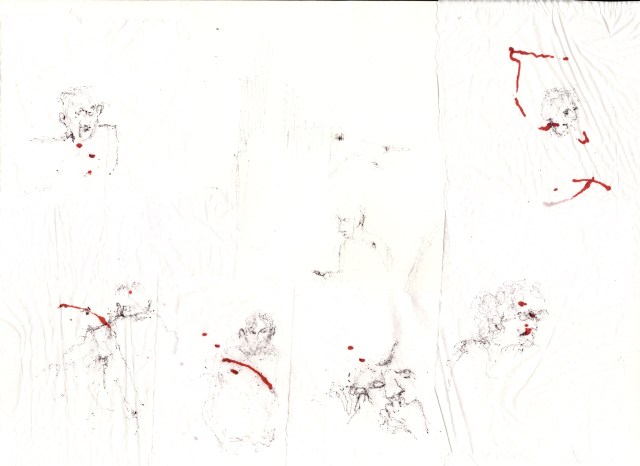
A concertina drawing on tissue that feels like skin....

drawing through

Dementia awareness session 1

A meeting begins of 15 people, what do we expect and hope?

Dementia awareness session 2

Dementia awareness session 3

Posted in Uncategorized | Leave a comment

Shapes

Joy of colour and shape. We were printing at Tea & Chat today. Set off with ideas but then suddenly there was a collaborative piece of work as blocks were exchanged and colours mixed on rollers……

On the way question ‘where are we going’ when I gave no answer ‘ I shouldn’t exist, I can’t remember where I am going or where I have been’ so when I asked where do you think you are, the reply came ‘in the moment’.

A place many of us want to be!

Shape shifting day. Off to Venice on a train tomorrow

Posted in Uncategorized | Leave a comment

St.David’s Day

Journeying to Brecon, the Welsh National anthem, Men of Harlech a conversation about Britons, men of Cambria being unafraid, of the Saxons.

Interesting that word Briton, no small chance that thought is tempered by the thought of the current plight of refugees.


Then to Welsh cakes and daffodils,  Dragons and Tom Jones.

Singing and colouring, laughing, chatting

allowing each other permission to try out new things

Getting covered in paint,

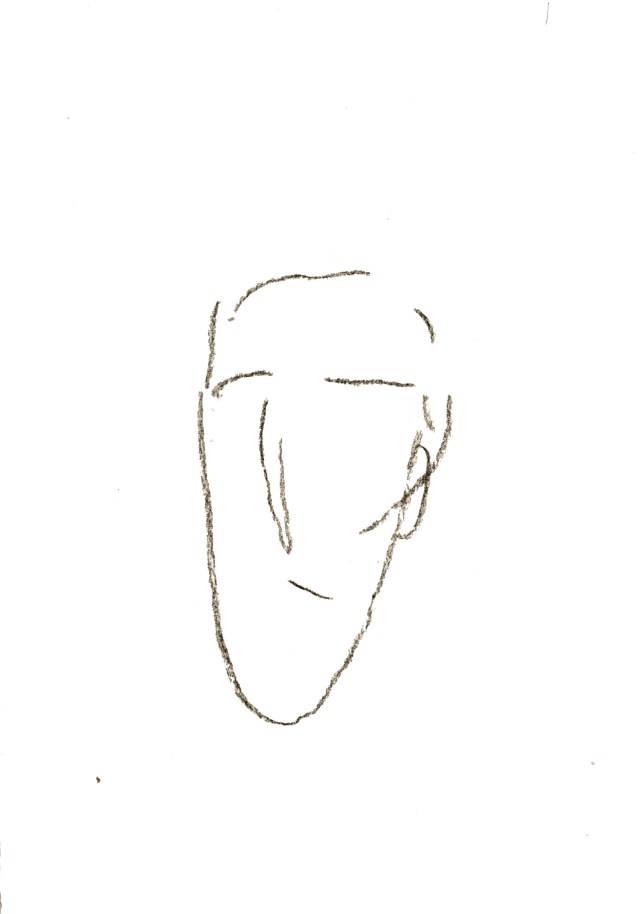
drawing without looking,

an energy directing itself


Days of celebration Mary and I


do we really need to have a diagnosis of dementia in order to explore the world?

Posted in Uncategorized | Leave a comment